

Mosquito Borne Diseases (EEE and West Nile Virus)
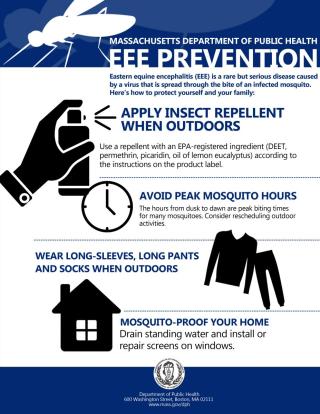
EEE/WNV Season Updates (Last updated 8/16/2024)
Boston — The Massachusetts Department of Public Health (DPH) today announced the first human case of Eastern equine encephalitis (EEE) in Massachusetts this year. The person is a male in his 80s who was exposed in Worcester County. As a result, the risk level in the communities of Douglas, Oxford, Sutton, and Webster has been raised to critical, and in Dudley, Northbridge, and Uxbridge the risk is increased to high.
The neighboring communities of Auburn, Charlton, Grafton, Leicester, Mendon, Millbury, Millville, Southbridge, and Upton are now considered at moderate risk.
Please start protecting yourself against mosquito bites now! Click here to view the latest Massachusetts arbovirus Risk Map to see areas at critical, high, and moderate risk. Information about current mosquito activity in Massachusetts is updated daily and can be found here.
Mosquito Borne Diseases in Massachusetts
Mosquito Borne Diseases, also known as arboviruses, are diseases spread to humans by the bite of an infected mosquito1. When a mosquito bites a human, the pathogen is released into the bloodstream of the human, where it can cause illness.
In Massachusetts, two mosquito borne diseases exist: West Nile Virus and Eastern Equine Encephalitis, also known as EEE2.
General Information About Massachusetts Mosquitoes
There are 51 kinds of mosquitoes in Massachusetts. Eight of those are known to spread disease. Most mosquitoes do not bite humans. In fact, the mosquitoes that carry EEE, Culiseta melanura, almost never bite humans. They prefer to bite birds instead3. They only bite humans when there are no nearby animals. In Massachusetts, most types of mosquitoes that carry viruses are most active between sunset and sunrise4.
Mosquito Life Cycle
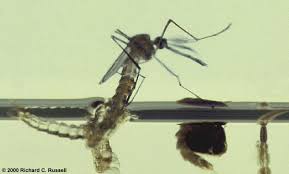
The mosquito life cycle is short, usually around 14 days4. The life cycle has four distinct phases: egg, larva, pupa and adult. The first three phases must take place in standing water, and mosquitoes can grow into adults within 7-8 days after a female lays her eggs.
Amazingly, female mosquitoes lay between 100-300 eggs at a time in standing water. They are drawn to ponds, watering cans, troughs, gutters, puddles, ditches and marshes, and even children’s toys. During mosquito season, most eggs hatch into larvae within 48 hours of being laid5.
The larva phase for 5 to 8 days before progressing to the pupa phase. After 1-2 days, the mosquitoes emerge from the water as adults.
Adult mosquitoes do not live very long: most female mosquitoes live for less than two weeks, and most males live for less than a week5.
Preventing Mosquito Borne Diseases
You can protect yourself against mosquito borne diseases. The best way to protect yourself against EEE and West Nile Virus is to not be bitten in the first place! We recommend that you:
- Use DEET, permethrin, picaridin, or oil of lemon eucalyptus-based insect repellants (bug spray) whenever you go outdoors, including working in your yard or sitting on your porch or patio.
- Wear long sleeved clothing and pants when you are outside
- The mosquitoes that carry EEE and West Nile Virus are most active at night, so avoid doing outdoor any outdoor activities from sunset to sunrise during peak mosquito season (from June to early October)
- Fix any damage to window and door screens
- Remove standing water from around your home to prevent mosquitoes from breeding
- Reduce places near your home where water can gather:
- Cover swimming pools when you’re not using them
- Empty out water barrels, water troughs, buckets, watering cans, bird baths, flowerpot saucers and trash cans at least once a week
- Turn over wheelbarrows when you aren’t using them
- Recycle old tires
- Clean out your gutters to make sure water can drain
Mosquito Borne Diseases in Animals
If you suspect your horses or any of your other animals have EEE, you must report it to the Department of Agricultural Resources and the Department of Public Health
- You can report the suspected case to DAR by calling 617-626-1795
- You can report the suspected case to DPH by calling 617-983-6800
Eastern Equine Encephalitis (EEE)
This is an overview of EEE, for more detailed information and resources, click here
Eastern Equine Encephalitis is a very rare and extremely dangerous disease transmitted by mosquitoes. In the wild, EEE cycles between birds and Cs. melanura mosquitoes. In some areas where Cs.melanura mosquitoes are very common, human-biting mosquitoes may get infected with EEE as well, then spread the virus to humans.
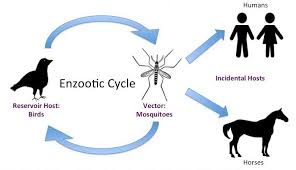
EEE is only spread from bird to mosquito to human. Humans cannot give EEE to other people, and a mosquito who bites an infected human will not become infected with EEE.
When Do Symptoms Start?
Symptoms usually start 4 to 10 days after the infecting bite. After symptoms begin, they usually last one to two weeks, though recovery often takes much longer.
EEE Symptoms
The first symptoms of EEE are fever (often 103º to 106ºF), stiff neck, headache, and lack of energy. These symptoms show up three to ten days after a bite from an infected mosquito. Inflammation and swelling of the brain, called encephalitis, is the most dangerous and frequent serious complication. The disease gets worse quickly and some patients may go into a coma within a week.
There is no treatment for EEE. In Massachusetts, about half of the people identified with EEE died from the infection. People who survive this disease will often be permanently disabled. Few people recover completely.
When to Seek Medical Attention:
If you or someone you know has sudden high fever, chills, headache or vomiting, contact a healthcare provider IMMEDIATELY.
West Nile Virus (WNV)
This is an overview of WNV, for more detailed information and resources, click here.
West Nile Virus is a mosquito borne disease that is usually only seen in animals but may also infect humans. In the wild, West Nile Virus cycles between birds and mosquitoes.
Rarely, a mosquito with West Nile Virus will bite a human and infect them. In most cases, WNV is transmitted to humans by the Culex mosquito species, particularly Culex pipiens.
WNV needs a mosquito bite to infect a person: it can’t spread directly from animals to people or from person to person. People over 50 years old are at higher risk for complications of WNV.
When Do Symptoms Start?
Symptoms usually start 4 to 10 days after the infecting bite.
West Nile Virus Symptoms
The majority of people who are infected with WNV (approximately 80%) will have no symptoms.
A smaller number of people who become infected (~ 20%) will have symptoms such as fever, headache, body aches, nausea, vomiting, and sometimes swollen lymph glands. They may also develop a skin rash on the chest, stomach and back.
Less than 1% of people infected with WNV will develop severe illness, including encephalitis or meningitis. The symptoms of severe illness can include high fever, headache, neck stiffness, stupor, disorientation, coma, tremors, convulsions, muscle weakness, vision loss, numbness and paralysis. Persons older than 50 years of age have a higher risk of developing severe illness.
When to Seek Medical Attention
If you or someone you know has any severe symptoms such as sudden fever, skin rash on their chest, stomach, and back, swollen lymph glands, or severe nausea, contact a healthcare provider.
What to Do If You Are Bitten by a Mosquito
Most mosquitoes do not spread infectious disease, and the worst you will experience from a mosquito bite is swelling and itching. It is important to keep an eye on your mosquito bites for infection and be alert for any symptoms of EEE or West Nile Virus for several days after being bitten.
Get medical attention if you experience a serious allergic reaction or any symptoms of West Nile Virus or EEE.
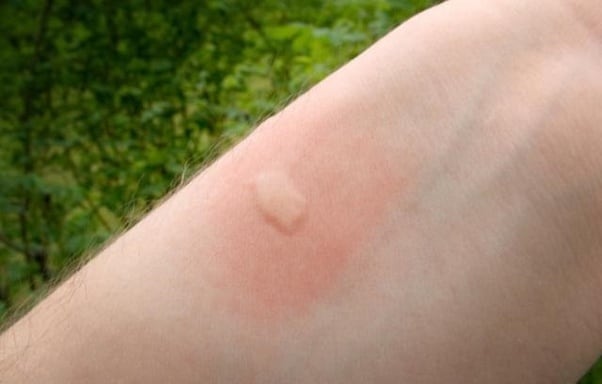
At Home Treatment for Mosquito Bites:
To reduce swelling and itching from mosquito bites, CDC recommends three different options:
- To reduce swelling, and itching, wash the skin close to the bite area with soap and water, then put an ice pack on it for 10 minutes.
- To reduce itching, clean the bite with soap and water, then make a mixture of 1 tablespoon baking soda and just enough water to make a paste. Put that paste on the bite for 10 minutes, then wash it off.
- You can also use an over-the-counter antihistamine cream to relieve itching. Make sure to follow the directions on the product’s label.
Mosquito Control in Uxbridge
Uxbridge is not part of a Mosquito Control Project (MCP). At Fall Town Meeting in 2019, an article to join the Central Massachusetts Mosquito Control Project (CMMCP) did not pass. So, no town-wide larvicide or adulticide applications are scheduled.
Helpful Links
For information on Mosquito borne illnesses, you can visit the Uxbridge, MA Department of Public Health and Centers for Disease Control websites or visit your family physician:
| Attachment | Size |
|---|---|
 2020 DPH Arbovirus Surveillance Plan 2020 DPH Arbovirus Surveillance Plan | 872.12 KB |
| VectorScape Community Report 9-27-21 | 53.32 KB |